

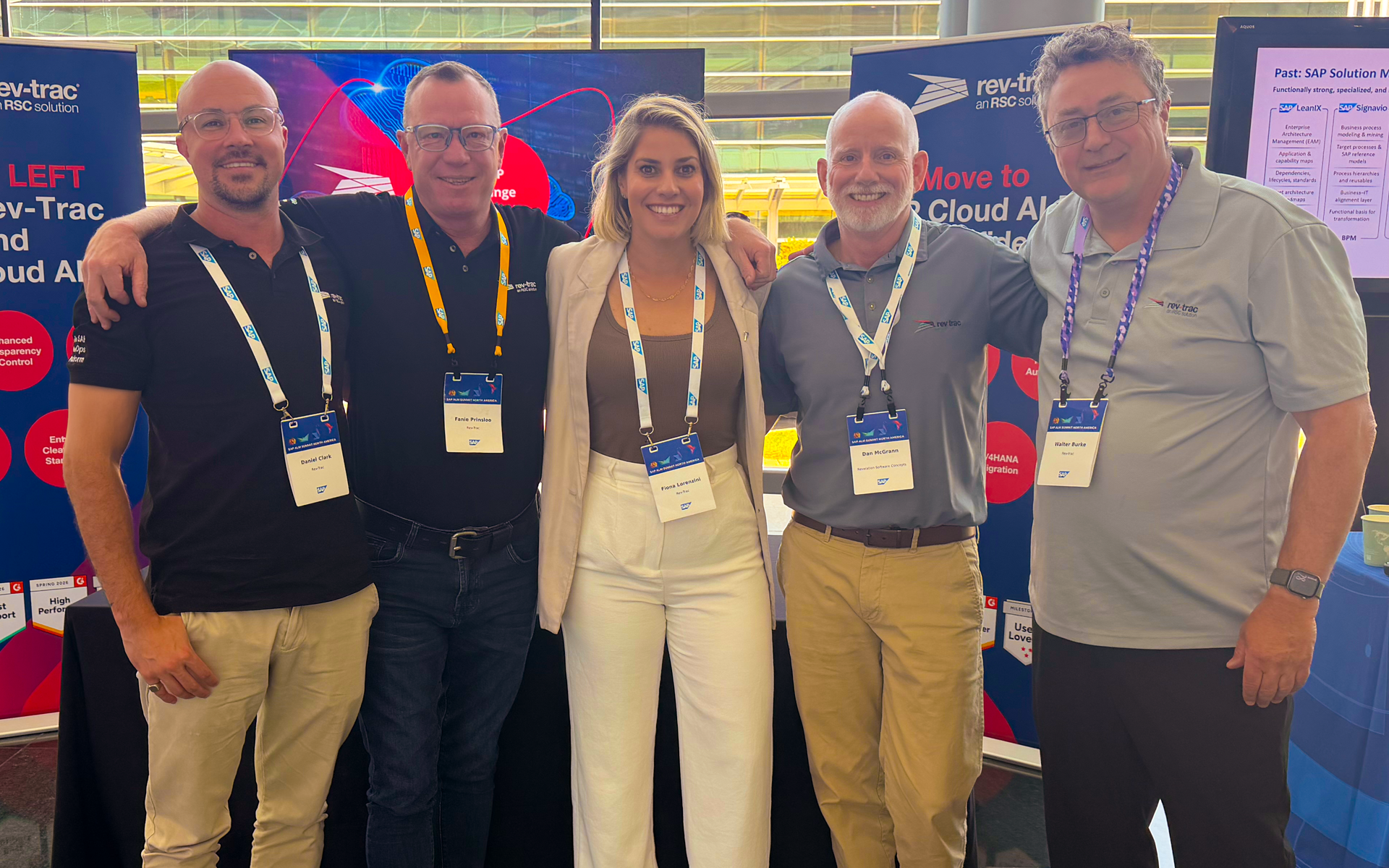
I’ve just returned from a week in Philadelphia at the SAP ALM Summit North America 2026 and one thing became very clear: Rev-Trac and SAP Cloud ALM aren’t competing. They’re solving different layers of the same problem. And for customers navigating real-world SAP landscapes, that makes all the difference.
SAP’s direction is clear; SAP Cloud ALM is the future of application lifecycle management. It’s a clean, modern system designed from the ground up for Cloud-centric ERP environments. That message came through consistently across sessions, conversations, and customer and prospect discussions.
But there’s a reality that doesn’t always make it into the slides. Most SAP customers aren’t starting from a clean slate. Their environments are complex, sometimes hybrid and on-premises. And that means moving to Cloud ALM is not straightforward, especially from ChaRM.
The reality: complexity doesn't disappear overnight
What we heard repeatedly at the event is that SAP customers are dealing with:
- ECC and S/4HANA running in parallel
- Multiple systems across regions
- Hybrid landscapes spanning on-premises and Cloud
- Global template strategies that demand tight control
- Regulatory environments that can’t compromise on governance
- Customized workflows while maintaining audit trails
Moving to the Cloud is a transformation journey. Daniel Clark, Product Manager at Rev-Trac, said in his keynote that organizations are on three different transformation journeys (On-premises to RISE, SolMan to CALM and/or Customization to Clean Core). And during the transition change complexity significantly increases.
Where Rev-Trac fits in
This is where the conversation shifts. Not away from SAP Cloud ALM, but deeper into what it takes to make it successful. Rev-Trac isn’t trying to replace Cloud ALM. It sits alongside it, strengthening the areas that become critical, especially in large, complex environments:
- Orchestrating change across multiple systems and landscapes
- Managing global template rollouts without breaking consistency
- Supporting dual maintenance during ECC to S/4HANA transitions
- Enforcing governance in regulated environments (GxP, SOX, etc.)
- Providing the control layer needed when change volume scales
That’s where additional layers of control become essential. Put simply: SAP Cloud ALM provides the foundation and Rev-Trac helps customers operate their change on top of it at scale, pace, and with confidence.
A moment that stood out
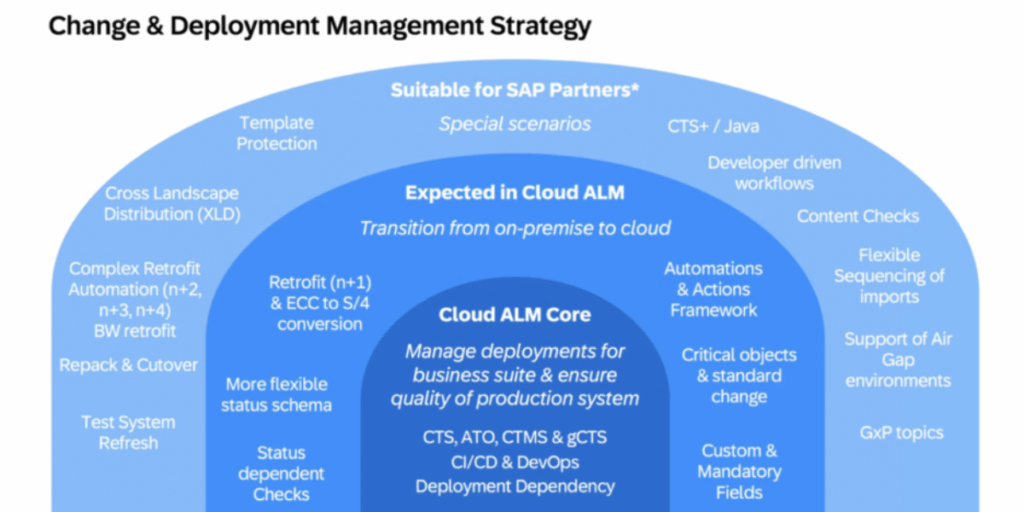
One of the clearest moments came during a session led by Frank Jungmann, Chief Product Expert at SAP. In his change & deployment management presentation, he shared SAP’s view of the ecosystem, what Cloud ALM covers natively, and where partners extend its capabilities.
Rev-Trac was called out as a solution that supports the outer layer. That’s an important distinction. It reinforces the idea that: SAP isn’t trying to solve every edge case inside Cloud ALM. They’re building a platform and relying on partners to extend it where needed.
The risk isn't SAP Cloud ALM. It's underestimating the journey.
There’s a pattern emerging in the market. Organizations agree that Cloud ERP (both public and private) is the destination.
But many are still working out how to get there without:
- Slowing down delivery
- Increasing risk in production
- Losing control over change
- Compromising compliance
And that’s exactly where complementary solutions like Rev-Trac come into play.
Final thought: this isn't either/or
If there’s one takeaway from the week for me, it’s this: This isn’t a choice between SAP Cloud ALM and Rev-Trac.
It’s about understanding what each is designed to do and how they work better together to ensure your change management strategy aligns with your business requirements and their objectives.
Visit here to see how Rev-Trac and SAP Cloud ALM work together to support change at scale in complex SAP environments.